Small-Batch Buttermilk Biscuits for Two: Scaling Down Without Losing Rise
Most biscuit recipes are written for a crowd. Two cups of flour, a whole stick of butter, a full cup of buttermilk, a dozen biscuits — and if you're cooking for two, most of those biscuits end up going stale on the counter. Halve the recipe carelessly instead and you get flat, tight pucks with a bitter edge from too much baking powder.
The fix isn't complicated, but it does require watching three things at once: leavening, butter ratio, and how a small mass of dough behaves in a hot oven. What follows is a buttermilk biscuit recipe built around one cup of flour, plus the reasoning behind each number so you can adjust it yourself.
Why Halving a Biscuit Recipe Usually Fails
Doubling a recipe is forgiving. Halving one is less so, because every small error gets proportionally larger.
- Leavening is hard to measure in tiny amounts. A quarter teaspoon of baking soda is roughly a pinch, and a pinch too much leaves a soapy aftertaste. Level your measuring spoons with the back of a knife, or weigh if your scale reads in single grams.
- Butter and flour have to stay in balance. Biscuits depend on cold fat creating steam pockets between layers. Too much butter and the dough spreads before it sets; too little and you get a cracker with a soft middle.
- Liquid is the wild card. Flour absorbs differently depending on brand, age, and the humidity in your kitchen, so always hold back a spoonful of buttermilk.
- A small dough heats fast. Four biscuits go from raw to overbaked in about three minutes. Set a timer and start checking early.
The Small-Batch Formula
This makes four biscuits from a 2-inch cutter, or three from a 2 1/2-inch cutter. It's a straight halving of a classic ratio, with one adjustment: slightly less liquid than the math calls for, added back only if the dough asks for it.
Ingredients
- 1 cup (125 g) all-purpose flour, plus extra for dusting
- 1 1/2 teaspoons baking powder
- 1/4 teaspoon baking soda
- 1/2 teaspoon fine salt
- 1 teaspoon sugar (optional, helps browning)
- 3 tablespoons (42 g) cold unsalted butter
- 6 tablespoons (90 ml) cold buttermilk, plus more if needed
The Ratio to Remember
For every cup of flour: 1 1/2 teaspoons baking powder, 1/4 teaspoon baking soda, 1/2 teaspoon salt, 3 tablespoons butter, and roughly 6 tablespoons buttermilk. Keep that sentence in your head and you can scale the recipe up or down without hunting for a new one.
Method
- Heat the oven to 425°F (220°C) and line a small sheet pan with parchment.
- Whisk the flour, baking powder, baking soda, salt, and sugar in a medium bowl — larger than you think you need, so you have room to fold.
- Grate the cold butter on the large holes of a box grater, or cut it into small cubes. Toss it into the flour and rub it in with your fingertips until you have flattened flakes, some the size of peas, some smaller. Work quickly; you want cool, flour-coated butter, not a uniform sandy mix.
- Pour in 5 tablespoons of the buttermilk. Stir with a fork until a shaggy, slightly dry dough forms. Add the last tablespoon only if dry patches remain. The dough should look rough and a little floury, which is exactly right.
- Turn the dough onto a floured counter and pat it into a rectangle about 3/4 inch thick. Fold it in thirds like a letter, press it flat, and repeat once. This builds the layers.
- Pat to a final 3/4-inch thickness. Cut straight down with a floured cutter and lift it without twisting — twisting seals the edges and caps the rise. Gently press the scraps together once and cut one more.
- Chill the cut biscuits on the pan for 10 minutes while the oven finishes heating.
- Bake 12–15 minutes, until the tops are golden and the sides look set and dry. Check at 11 minutes.
Four Details That Decide Whether They Rise
Keep everything cold
Cold butter, cold buttermilk, and if your kitchen is warm, a bowl that's been in the freezer for five minutes. Warm butter melts into the flour instead of flaking through it, and the layers disappear.
Fold, don't knead
Two letter folds give you flaky strata. More handling than that develops gluten, and gluten is what makes biscuits chewy instead of tender.
Cut cleanly
Press the cutter straight down and lift straight up. Twisting crimps the edges together and the biscuit rises sideways instead of up. A sharp cutter with a thin rim beats a dull one every time.
Chill before baking
Ten minutes in the refrigerator firms the butter again and lets the leavening start working. The oven spring on a chilled biscuit is noticeably taller.
Small Changes Worth Trying
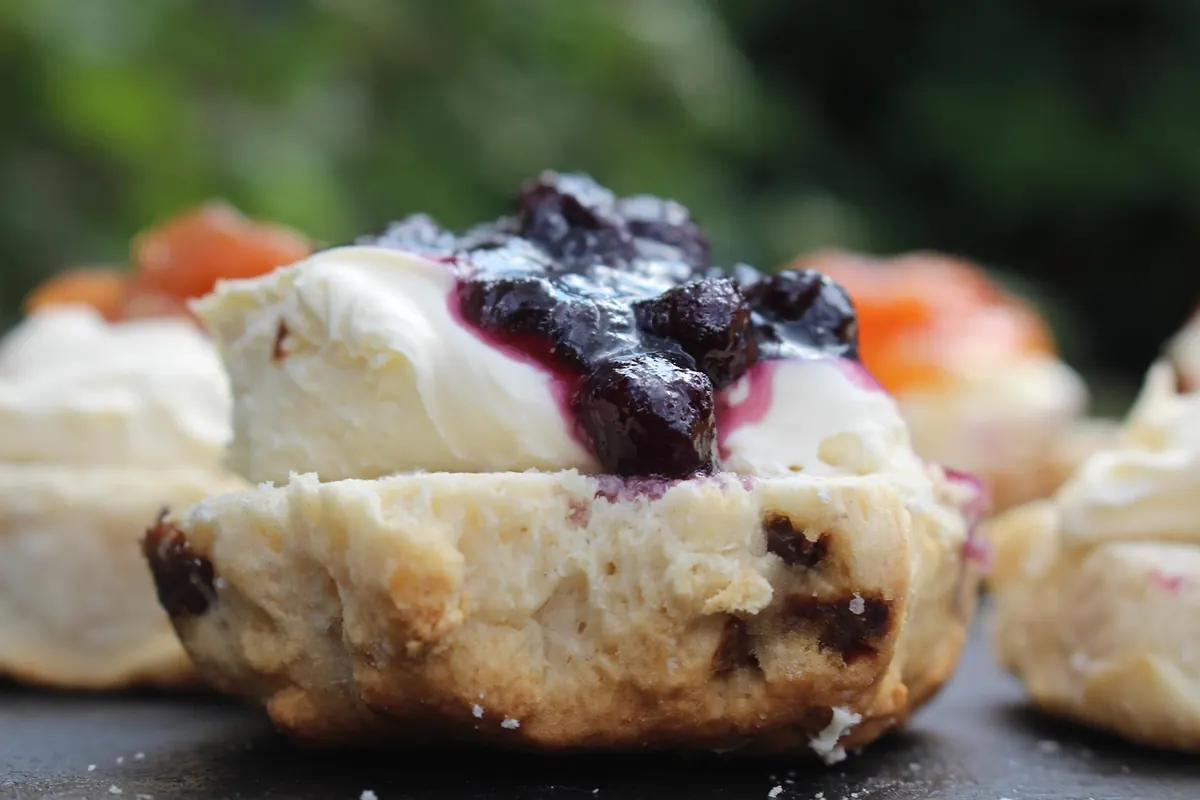
Stir 1/4 cup of sharp cheddar and a tablespoon of chopped chives in with the buttermilk for a savory version, or brush the tops with melted butter and a crack of black pepper right out of the oven. A tablespoon of sugar and a pinch of cinnamon makes a decent breakfast biscuit that's good with jam.
If you don't keep buttermilk, stir 1 teaspoon of lemon juice or white vinegar into 6 tablespoons of milk and let it sit for 10 minutes. Buying buttermilk for one recipe is annoying, so freeze what's left in an ice cube tray — each cube is about 2 tablespoons, and three cubes is exactly one batch.
Baking for Two, Practically
Unbaked cut biscuits freeze beautifully. Put them on a sheet pan until solid, then move them to a bag. Bake from frozen at 425°F, adding two or three minutes to the time. That way you can make a full batch and bake two at a time, fresh, whenever you want them.
For leftovers, split the biscuit and toast it cut-side down in a buttered skillet, or warm it wrapped in foil in a 350°F oven for five minutes. Biscuits are best the day they're made, which is the quiet argument for a four-biscuit batch in the first place: you finish them before they have a chance to disappoint you.
Photo: Suanpa / Pixabay