Baking Powder vs. Baking Soda in Biscuit Recipes: How Each Affects Rise and Flavor
Two nearly identical containers sit in your cupboard, and both promise to make dough rise. That similarity has ruined a lot of biscuit batches. Baking powder and baking soda are not interchangeable, and reaching for the wrong one — or guessing at the amount — is the fastest way to end up with pale, flat discs, or biscuits that puff up in the oven and then sink before they reach the table.
The rules behind them are simpler than most bakers expect. Once you know what each one needs in order to work, you can read a biscuit recipe, spot which leavener belongs in it, and adapt on the spot when the tin you need is empty.
What Each One Is Actually Made Of
Baking soda is a single ingredient: sodium bicarbonate. It's alkaline, and on its own it does nothing. Drop it into a liquid with no acid and you get a soapy taste and no lift at all. Give it an acid — buttermilk, yogurt, sour cream, lemon juice, vinegar, molasses — and it dissolves, reacts, and releases carbon dioxide.
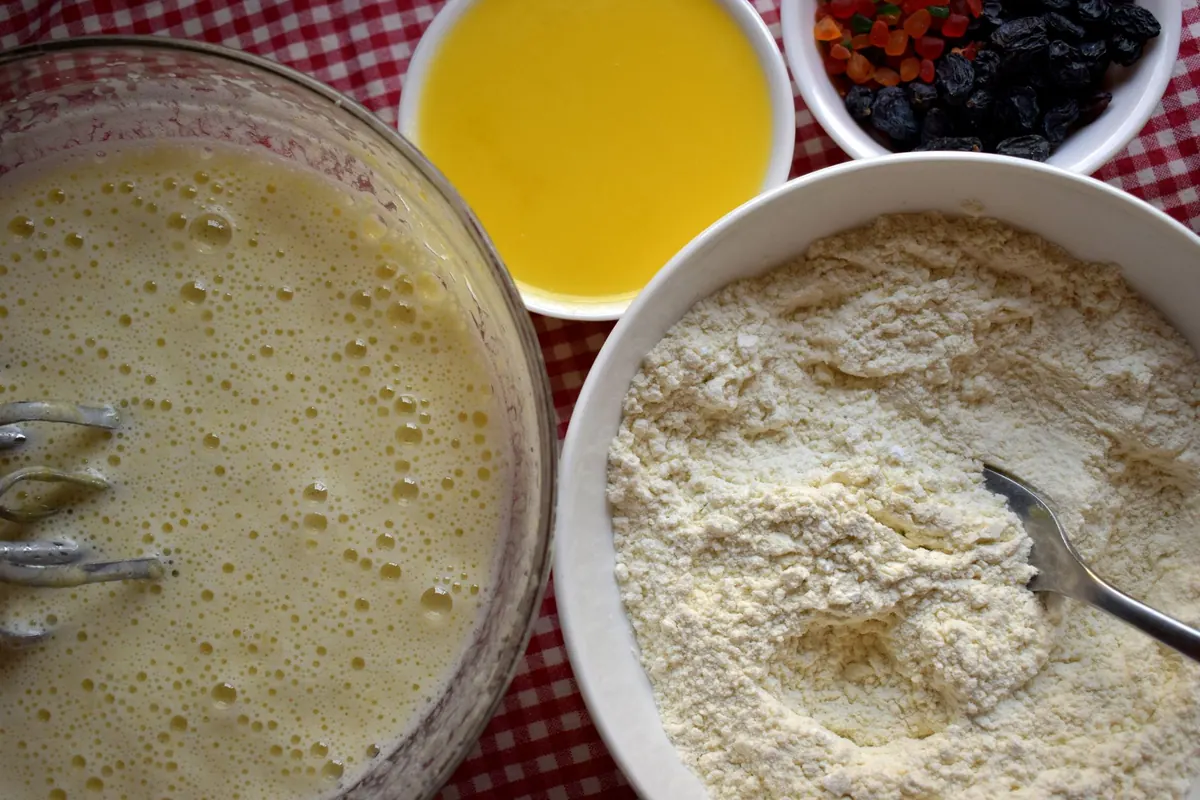
Baking powder is a complete kit in a tin. It contains baking soda plus a dry acid, usually monocalcium phosphate or sodium acid pyrophosphate, along with a little cornstarch to keep everything dry and free-flowing. Because the acid travels with the soda, baking powder works with plain milk, water, or whatever liquid the recipe calls for.
Most baking powder sold in American supermarkets is double-acting. A small amount of gas escapes as soon as it gets wet, and the rest releases once the dough hits the oven. Single-acting powder releases everything at room temperature, which is why older recipes that use it tell you to work quickly.
Why the Acid Does More Than Trigger Bubbles
When baking soda neutralizes properly, the reaction leaves behind mild, neutral compounds. When it doesn't, the leftover soda stays in the biscuit and you can taste it: a soapy, slightly metallic edge and sometimes a yellowish cast to the crumb. Ordinary amounts won't hurt you, but nobody wants a biscuit that tastes like the inside of a baking tin.
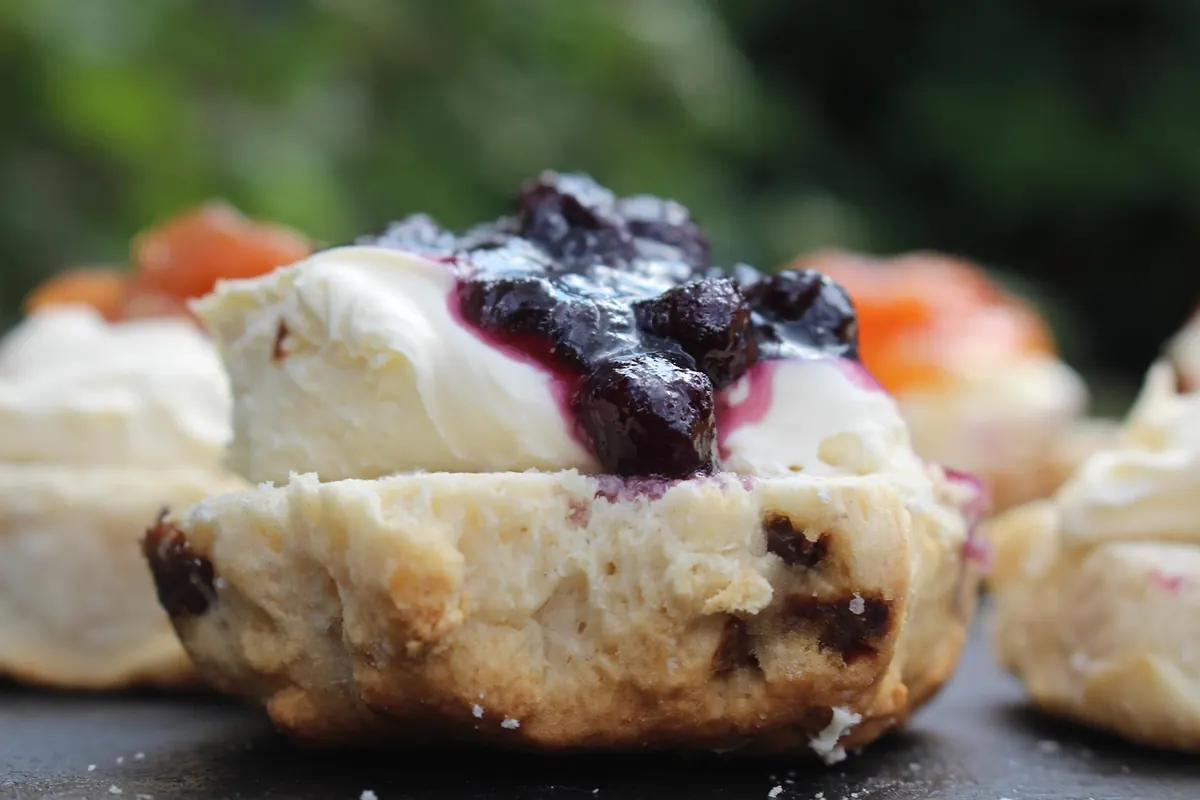
Acidic liquids shape flavor and color, too. Buttermilk and yogurt leave a gentle tang in the crumb, and an alkaline environment encourages the crust to brown. That's why buttermilk biscuits come out golden and faintly sour, while biscuits made with plain milk and baking powder taste milder and often bake up paler.
That's the reason so many good biscuit recipes call for both leaveners. The soda handles the acid in the buttermilk — as a rough guide, plan on 1/4 to 1/2 teaspoon per cup of acidic liquid — while the powder supplies steady, predictable lift for the rest of the dough.
If a recipe uses buttermilk and only baking powder, it will still work. You'll just lose some of the tang and color that make the biscuit distinctive.
Rise Happens on a Timeline
Timing separates the two more than chemistry does. Baking soda starts fizzing the second it touches liquid. Mix the dough, cut the biscuits, and get them into a hot oven within a few minutes, or the gas you paid for escapes into the kitchen. That's manageable for drop biscuits you throw together on a Tuesday, but it punishes anyone who rolls, re-rolls, and takes their time.
Double-acting baking powder is forgiving. It gives a small first lift during mixing and a second, larger push in the oven, which is why it's the safer default when the dough rests in the refrigerator for 20 minutes — a step many bakers use to firm up the butter before cutting. If your dough chills, lean on powder.
Choosing for the Biscuit You're Making
- Classic buttermilk biscuits: both. A typical two-cup batch uses about 1/2 teaspoon of baking soda and 1 to 2 teaspoons of baking powder.
- Cream biscuits: baking powder only. Heavy cream is barely acidic, so soda would have almost nothing to react with.
- Sweet biscuits with brown sugar or molasses: often both, since those sugars are mildly acidic and give the soda something to work on.
- Drop biscuits made with soured milk: baking powder alone is fine, or add a small amount of soda if you want the tang to come through more clearly.
How to Substitute Without Wrecking the Batch
Substitutions work, but they change the biscuit, so adjust your expectations along with the ingredients.
- Baking powder in place of soda: use roughly three to four times the volume — 1/4 teaspoon of soda becomes about 1 teaspoon of powder. Keep the buttermilk for flavor, and expect a milder, less browned biscuit.
- Baking soda in place of powder: trickier, because soda needs an acid partner. Use about a quarter of the volume the powder called for, and make sure the recipe already contains buttermilk, yogurt, sour cream, or a teaspoon of lemon juice or vinegar to activate it. Swap soda into a plain-milk recipe and you'll taste the mistake.
- Neither on hand: a splash of club soda or a beaten egg white can add a little lift, but neither is a true substitute. Better to choose a recipe that doesn't depend on a chemical leavener at all.
Testing and Storing What's in Your Cupboard
Even the right leavener fails if it's spent. Baking soda keeps almost indefinitely as long as it stays dry, but baking powder — especially double-acting — begins to fade after six to twelve months, and humidity speeds that up.
- To test baking soda: stir 1/2 teaspoon into a few tablespoons of vinegar. It should fizz hard and fast.
- To test baking powder: stir 1 teaspoon into a cup of hot water. Fresh powder bubbles steadily; a weak or silent reaction means it's time for a new tin.
Store both in airtight containers away from the stove, the dishwasher, and any other source of heat or steam. A marker and a date on the lid saves you from guessing next spring.
Troubleshooting Biscuits by How They Turn Out
- Flat and pale with no lift: the leavener was dead, undermeasured, or the dough sat too long before baking.
- Big oven spring, then a collapse: usually too much leavener — the structure sets before the gas escapes, then falls.
- Soapy or metallic taste, yellow crumb: too much baking soda with too little acid to neutralize it.
- Golden crust but gummy center: the leavener is probably fine; look at your butter temperature and how much you handled the dough.
Read the recipe through the lens of acid and timing, and the choice stops being a coin flip. Buttermilk in the ingredient list is a signal that soda belongs there; a plain-milk dough that rests before baking is asking for powder. Get that pairing right, and the tin in your hand matters far less than the logic behind it.
Photo: Irma Sjachlan / Pexels